
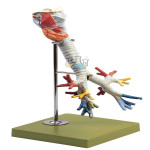
Atlas, Axis & Occipital Bone Model
.png)
Product Code : SCL-BLE-10969
The atlas axis occipital bone model is an anatomical teaching model used for demonstrating the C1 atlas, C2 axis, occipital bone and upper cervical spine relationship in biology, anatomy and medical training. It helps students study the skull base, foramen magnum, occipital condyles, dens and head-neck joint alignment through direct visual observation.
Product Description
The Atlas, Axis & Occipital Bone Model by Lab Glassware Manufacturer is designed for anatomy classrooms, biology laboratories, nursing institutes, physiotherapy training centres, paramedical colleges and medical training labs. It provides a focused physical reference for explaining the craniovertebral junction, where the skull connects with the first two cervical vertebrae.
This model supports repeated classroom demonstration without using biological specimens. It is useful for teaching the atlanto-occipital joint, atlanto-axial joint, atlas ring, axis dens, occipital condyles and upper cervical movement concepts when these features are visible on the supplied model. It is a practical addition to institutional biology lab equipment collections.
Key Features
- Demonstrates skull base, atlas and axis anatomy for upper cervical teaching.
- Useful for explaining C1 atlas, C2 axis, occipital bone and dens relationships.
- Helps students understand head-neck movement, rotation and nodding mechanics.
- Suitable for schools, colleges, nursing, physiotherapy and medical training labs.
- Supports visual identification in supervised anatomy practical sessions.
- Non-consumable educational model for repeated classroom demonstration.
- Material, dimensions, movement function and exact anatomical details should be confirmed from the final product datasheet.
Technical Specifications
|
Specification |
Detail |
|
Product Name |
Atlas, Axis & Occipital Bone Model |
|
Brand |
Lab Glassware Manufacturer |
|
Product Category |
Biology Lab Equipment / Anatomy Model / Spine Model / Skull Model |
|
Intended Users |
Schools, colleges, nursing institutes, physiotherapy centres, paramedical centres, medical colleges and anatomy laboratories |
|
Primary Keyword |
atlas axis occipital bone model |
|
Secondary Keywords |
atlas and axis model, occipital bone model, cervical spine model, craniovertebral junction model, C1 C2 vertebrae model, skull base model, anatomy teaching model, medical training spine model |
|
Capacity |
Not applicable; this is an anatomical teaching model |
|
Included Components |
Atlas, axis and occipital bone model; base, labels, storage box or guide only if confirmed |
|
Standards / Certifications |
No product-specific certification confirmed |
What’s Included in the Kit
- 1 atlas, axis and occipital bone model
- Display base or mounting support
- Labelling guide or instruction sheet
- Storage box or tray
Applications / Uses
- Teaching upper cervical spine anatomy in biology and anatomy classes.
- Identifying the atlas, axis, dens, occipital bone and skull base landmarks.
- Explaining atlanto-occipital and atlanto-axial joint relationships.
- Supporting nursing, physiotherapy, paramedical and medical foundation training.
- Using with other science lab equipment during classroom demonstrations.
- Comparing the model with skull, vertebrae, spinal cord and full skeleton models.
How to Use the Atlas, Axis & Occipital Bone Model
- Place the model on a clean, stable demonstration table.
- Orient the model so the occipital bone, atlas and axis are clearly visible.
- Identify the atlas as C1, the axis as C2 and the occipital bone as part of the skull base.
- Point out the dens, foramen magnum and occipital condyles if these features are shown.
- Use the model with spine charts, skull models or general lab equipment during structured practical sessions.
Safety note: Handle the model carefully. Do not drop it, force apart fixed joints or use it as a load-bearing object.
Care & Maintenance
- Clean the model with a soft dry or slightly damp cloth.
- Avoid abrasive pads, strong solvents and harsh cleaning chemicals.
- Store the model in a dry cabinet, tray or box after classroom use.
- Keep it away from direct heat, excessive moisture and rough handling.
Why Choose Lab Glassware Manufacturer
Lab Glassware Manufacturer supplies laboratory glassware, scientific laboratory instruments, lab experiment setups, science kits, mathematics kits, didactic models and STEM models for educational use. The company supports schools, colleges, universities, laboratories and institutional buyers with a broad teaching and laboratory product range. Its catalogue supports classroom demonstration, practical science education and export procurement requirements. Buyers can review more items on the product range page or request details through the contact page.
Frequently Asked Questions
What is an atlas axis occipital bone model used for?
An atlas axis occipital bone model is used to teach the anatomy of the skull base and upper cervical spine. It helps students understand how the occipital bone connects with C1 and C2.
What are the atlas and axis?
The atlas is the first cervical vertebra, also called C1. The axis is the second cervical vertebra, also called C2, and it includes the dens or odontoid process.
Which structures can students study on this model?
Students can study the atlas, axis, occipital bone, dens, foramen magnum and occipital condyles if these structures are included in the final supplied model.
Is this model suitable for physiotherapy training?
Yes. The model can support basic physiotherapy and medical anatomy teaching related to head-neck movement, upper cervical alignment and spinal structure.
What material is the atlas axis occipital bone model made from?
The exact material is not confirmed in the supplied data. Add PVC, resin, plastic or another material only after checking the final product datasheet.
Is this a diagnostic medical model?
No. It is an educational anatomy model for classroom and laboratory demonstration. It is not a diagnostic, surgical or patient-treatment device.
For related skull, spine and classroom anatomy products, explore the Biology Lab Equipment category from Lab Glassware Manufacturer.
Recommended Product Image ALT Text
- Atlas axis occipital bone model showing C1 C2 and skull base anatomy for classroom teaching
- Craniovertebral junction model for biology lab skeletal demonstration
- Atlas and axis with occipital bone model for physiotherapy nursing and medical training
.jpg)
.jpg)
 (1).png)

.jpg)
 (1).png)
.jpg)